
Barcelona claimed their second consecutive league title at home in El Clasico, defeating Real Madrid 2-0. It was a confident and deserved victory: they made the difference in the first 20 minutes and controlled the game, managing the second half in economy mode. Madrid resisted as best they could in their current state, offering tactical adjustments after the early setback. Spoiler: it didn’t work.
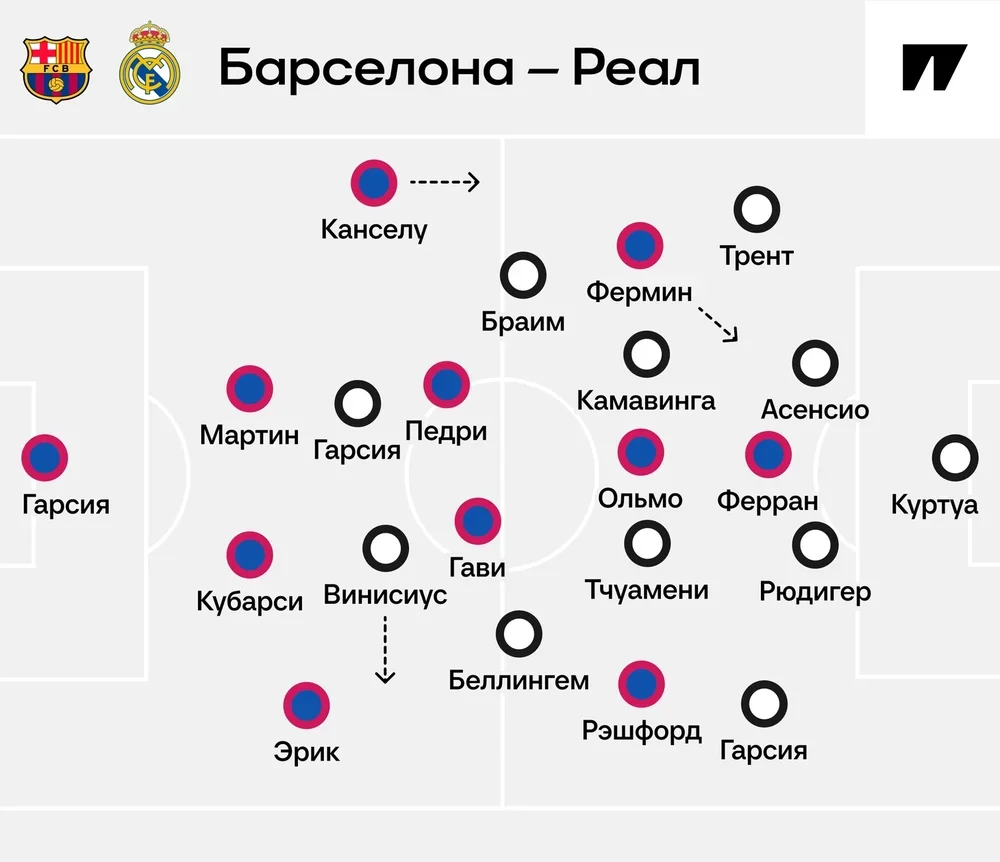
A quick disclaimer about Real Madrid’s condition: due to a dressing room conflict and injuries to key players like Federico Valverde and Arda Guler, the team entered El Clasico in disarray. What’s happening in Madrid is a separate issue. This doesn’t diminish Barcelona’s achievement, but it’s an important context to acknowledge.
Just minutes before kickoff, Dean Huijsen was ruled out for Real Madrid, replaced by Raul Asencio. Kylian Mbappe hadn’t recovered and stayed home. Eder Militao was also unavailable. Alvaro Arbeloa fielded the strongest lineup among those available.
Barcelona missed the injured Lamine Yamal, while the recently recovered Raphinha was saved for the second half. Hansi Flick chose not to risk winger Rune Bardagji, starting Marcus Rashford on the right. In defense, Eric Garcia came in for Jules Kunde—a tactical gamble that paid off handsomely.
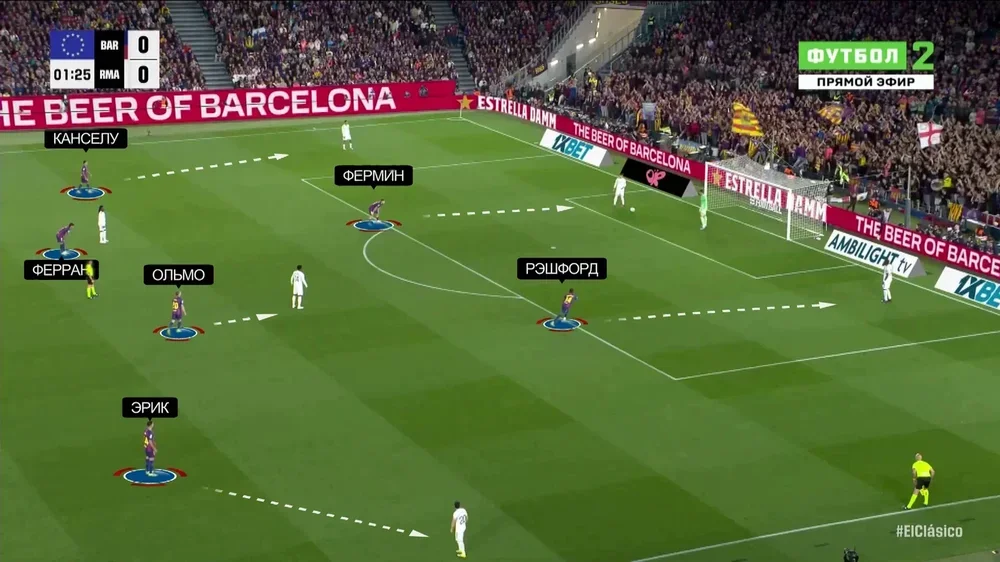
Both teams opted for aggressive high pressing. For Barcelona, it’s typical. For Real Madrid, it was more of a surprise. The difference in execution was clear.
Barcelona’s pressing started with Fermin Lopez and Rashford (nominal wingers). Ferran Torres and Dani Olmo marked the central midfielders. Eric Garcia and Joao Cancelo covered the flanks.
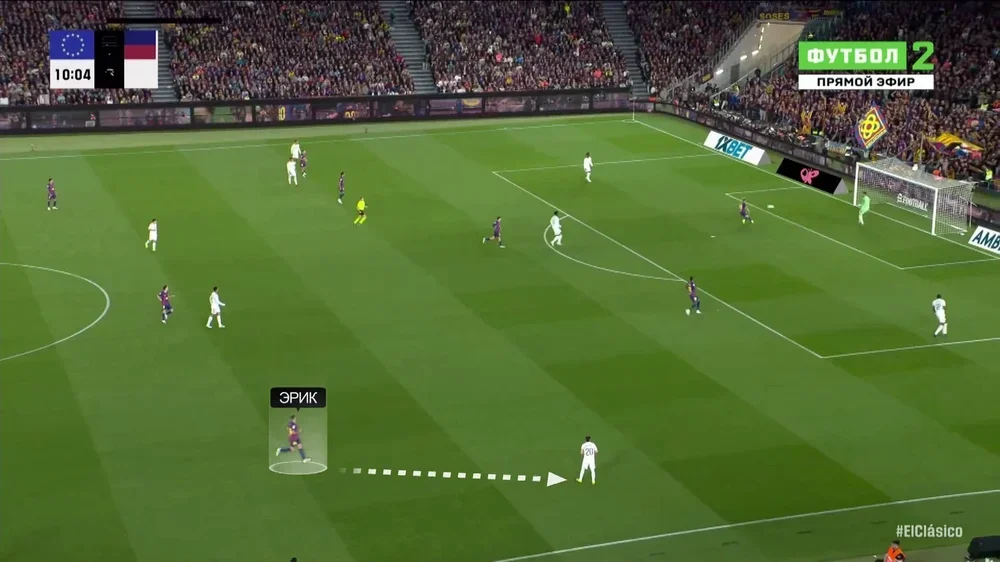
This setup allowed tight pressure in the center, but the left flank was potentially risky: Vinicius against Pau Cubarsi in space. In practice, this scenario occurred less often than expected. The reason was an outstanding Eric Garcia.
He positioned himself intelligently and reacted to each play, managing to combine pressing readiness on Fran Garcia while dealing with Vinicius. He started in a pressing position.
The attack went through another zone, so Eric returned to face Vinicius. It looked simple in one instance, but choosing the optimal position to control two possible attack developments and constantly switching throughout the match is challenging. It was Eric’s speed and excellent decisions that glued Barcelona’s press together. Much of the pressing relied on him, and Garcia delivered. A powerful performance!
Real Madrid pressed boldly but with gaps. They set up in a 4-4-2 with a focus on the center, almost a 4-2-2-2. This structure requires constant shifts to the ball; otherwise, the opponent’s fullback gets too much freedom. Over the season, Real Madrid doesn’t play with constant pressing, so their organization and even reaction speed suffered.
This gave Cancelo freedom, leading to frequent threats from depth. In this moment, Brahim Diaz was near the Portuguese, but in practice, he allowed him to control the ball, turn, and prepare a pass. The shifts were too slow, while the defensive line stayed high because the team was technically in a pressing phase.
Another type of failure came from defenders’ actions with a high line. Sometimes the entire back four stuck together, sometimes the center-backs followed opponents all the way, and sometimes they both stepped up simultaneously. Real Madrid simply lacked the cohesion and understanding that underpin any quality press. But the desire to press was consistent, not situational.
To Arbeloa’s credit, perhaps the two quick goals forced the team to be bolder than planned. The original plan might have been more moderate. Regardless, the pressing phase organization was lacking.
Real Madrid didn’t achieve much in attack, but there were clear intentions. They trailed 0-2 from the 18th minute yet managed only eight shots and even…